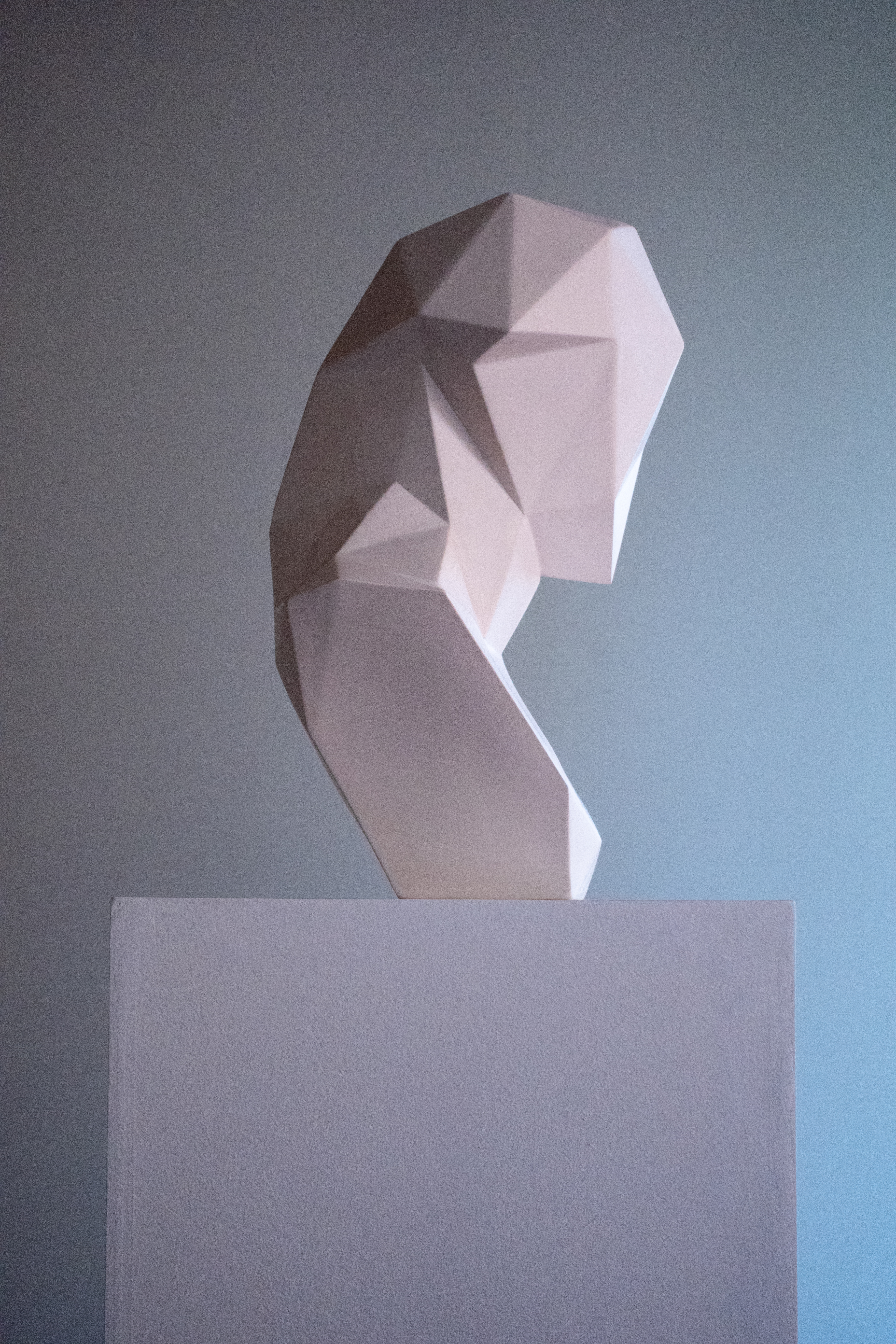
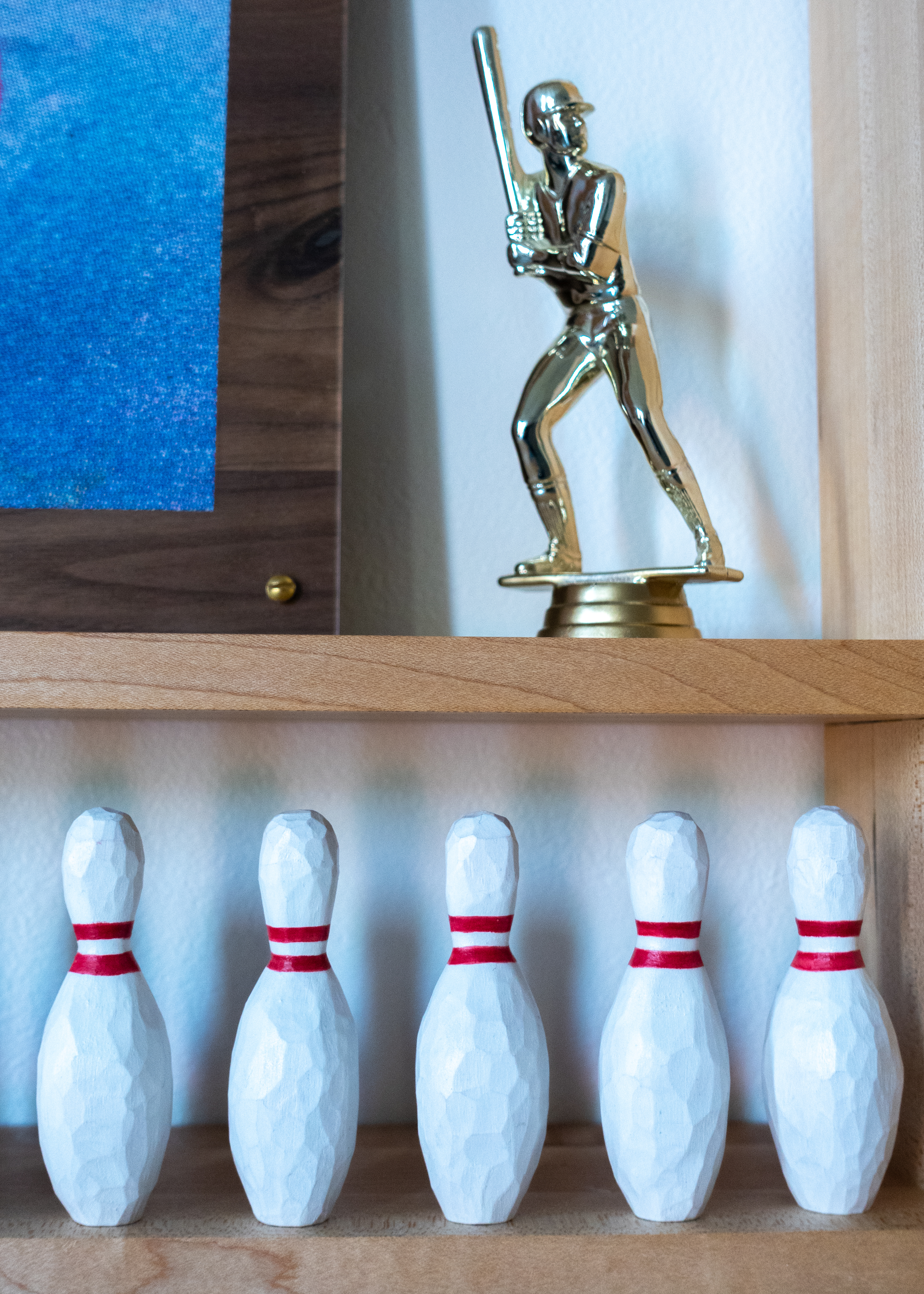
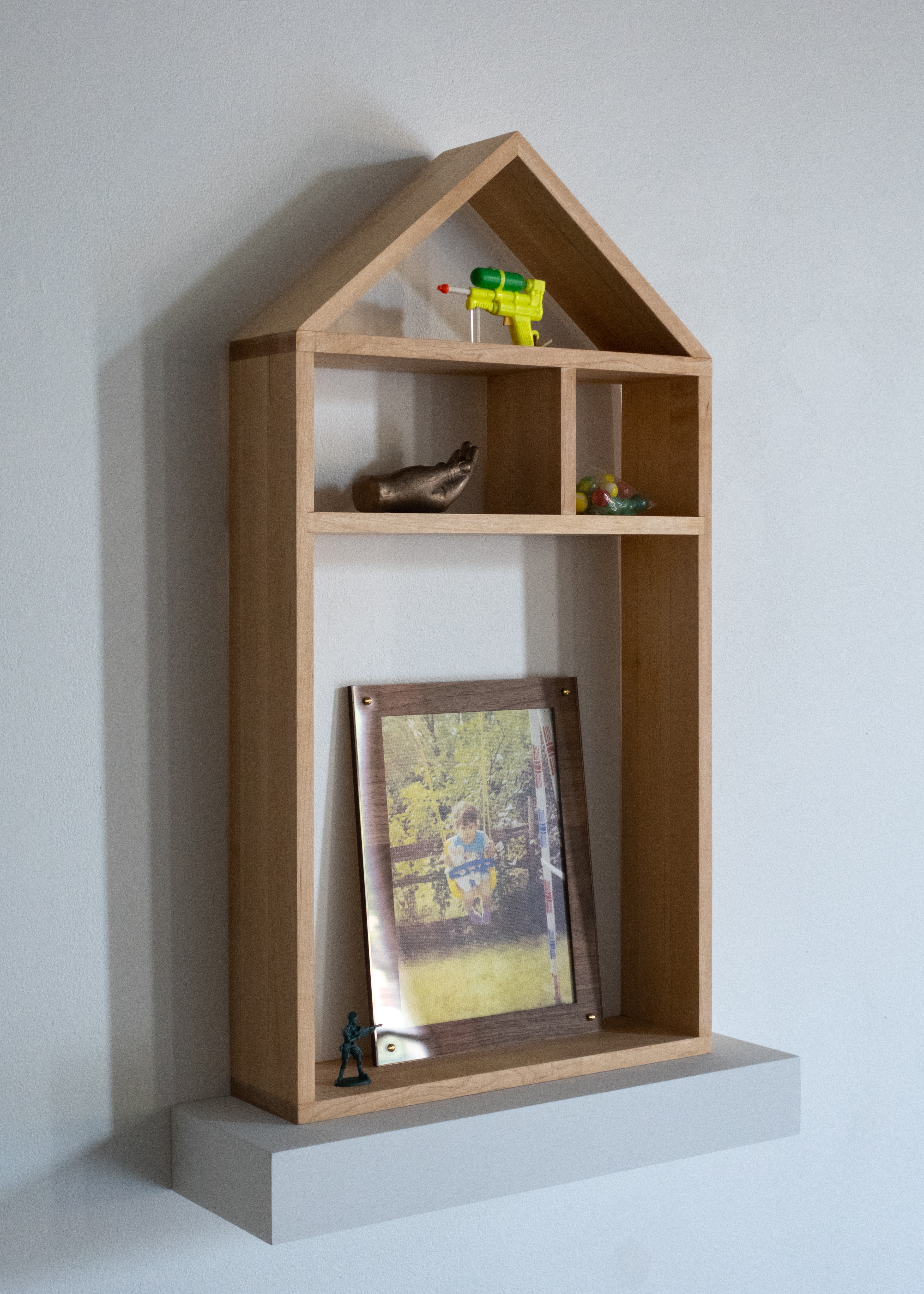
The work in this exhibition was first displayed at Nebraska Wesleyan University’s Elder Gallery from August 27-October 13, 2024. The exhibition consisted of the title series work Dear Helia, in conversation with two additional series entitled Patch Envy and Inheritance Series, respectively.
Exhibition Statement:
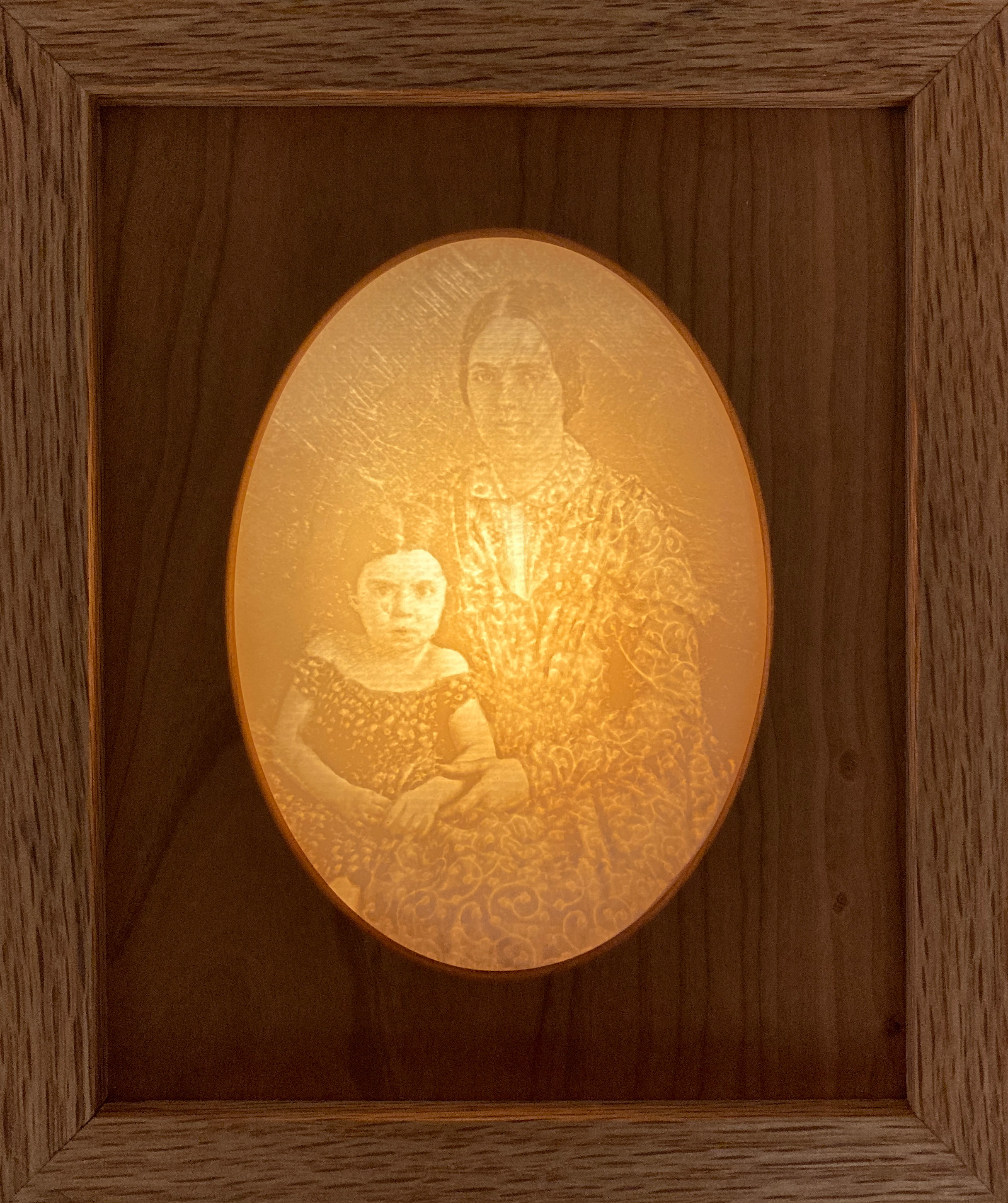
This body of work began with an image – a circa 1850s daguerreotype depicting a little girl embracing a bust of George Washington. She was the daughter of the photographer, who had already produced a similar composition featuring his son1. The image depicts three-year-old Helia who rests her cheek on Washington’s marble chest and looks beyond him out of frame, her duty performed in a plaid dress, delicately holding a basket of flowers. The performance of gender evidenced in this 19th century image struck me deeply, reverberating off my own sense of gender trouble, and created a longing to commune with Helia. I began writing to her, asking unanswerable questions such as, “Did you like that dress you wore?”
In my research, Helia has become another star in a constellation of reckoning with the realities of existing within the United States. I imagine the glossy surface of the daguerreotype as a mirror for generations of children who have inherited complicated legacies. While this work often takes an autobiographical vantage point, the specificity of certain objects and images collected here are translations of memory and desire, both real and imagined. The work represents a gathering of joyful moments along with heartbreaking ones, that familiar mixture that many Americans feel.
Ultimately, the perspective of one white-bread kid from the 1990s offers a mere foil for exploring themes of gender, childhood, and the complexities of relating to the generations that raise us. In the context of family and country, this work sits at the confluence of many types of legacy, a complicated patchwork constructed from the real and ideal. Indeed, the challenges of confronting the painful flaws of American history and politics, form in the same universe where memories of birthday parties, baseball games, and whittling sticks buoy the heart. I hope to offer sites of resonance for those sifting through similar layers of questioning.








- The photographer, Gabriel Harrison, named his son George Washington Harrison, and presents the image of a young boy with a stoic gaze, staring in determination up towards his namesake. As Laura Wexler points out, Harrison literally and metaphorically positions his own offspring in the likeness and legacy of the Founding Fathers, and by extension, the nation. This image offers a stark contrast to the one of Helia, a gendered binary that plainly acknowledges who could be expected to inherit greatness.
Wexler, Laura. Techniques of the Imaginary Nation: Engendering Family Photography. Durham, NC: Duke University Press, 1999.
↩︎
 Bri Murphy